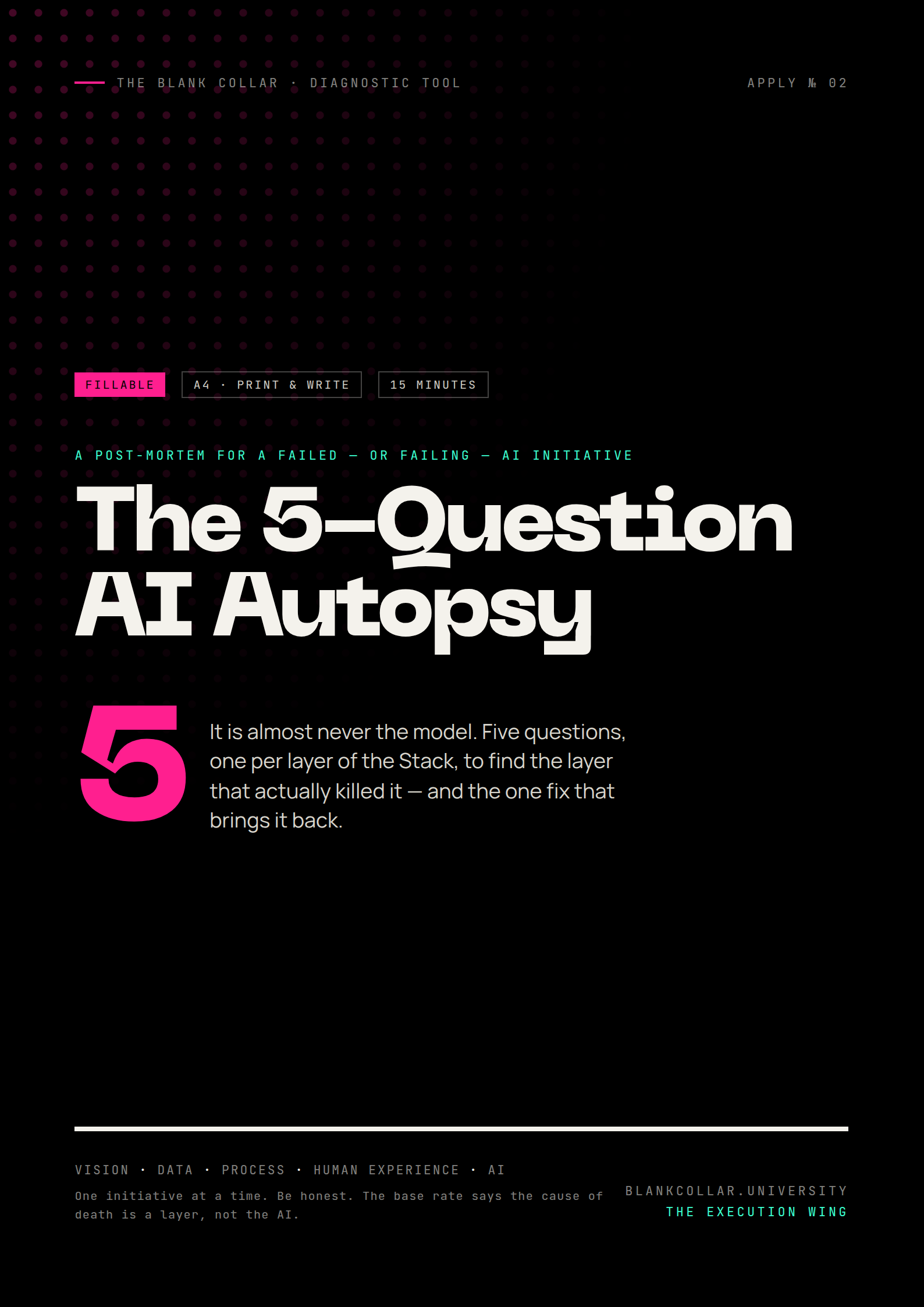
The 5-Question AI Autopsy
It is almost never the model. Five questions to find the layer that killed it.
What it is
When an AI initiative fails, the reflex is to blame the model and buy a better one. The evidence says otherwise: 95% of corporate AI transformations returned zero measurable P&L impact, and the cause was a learning gap, not a weak model. In nearly every famous failure the model did exactly what it was built to do: what broke was a layer that was rotten before the technology arrived.
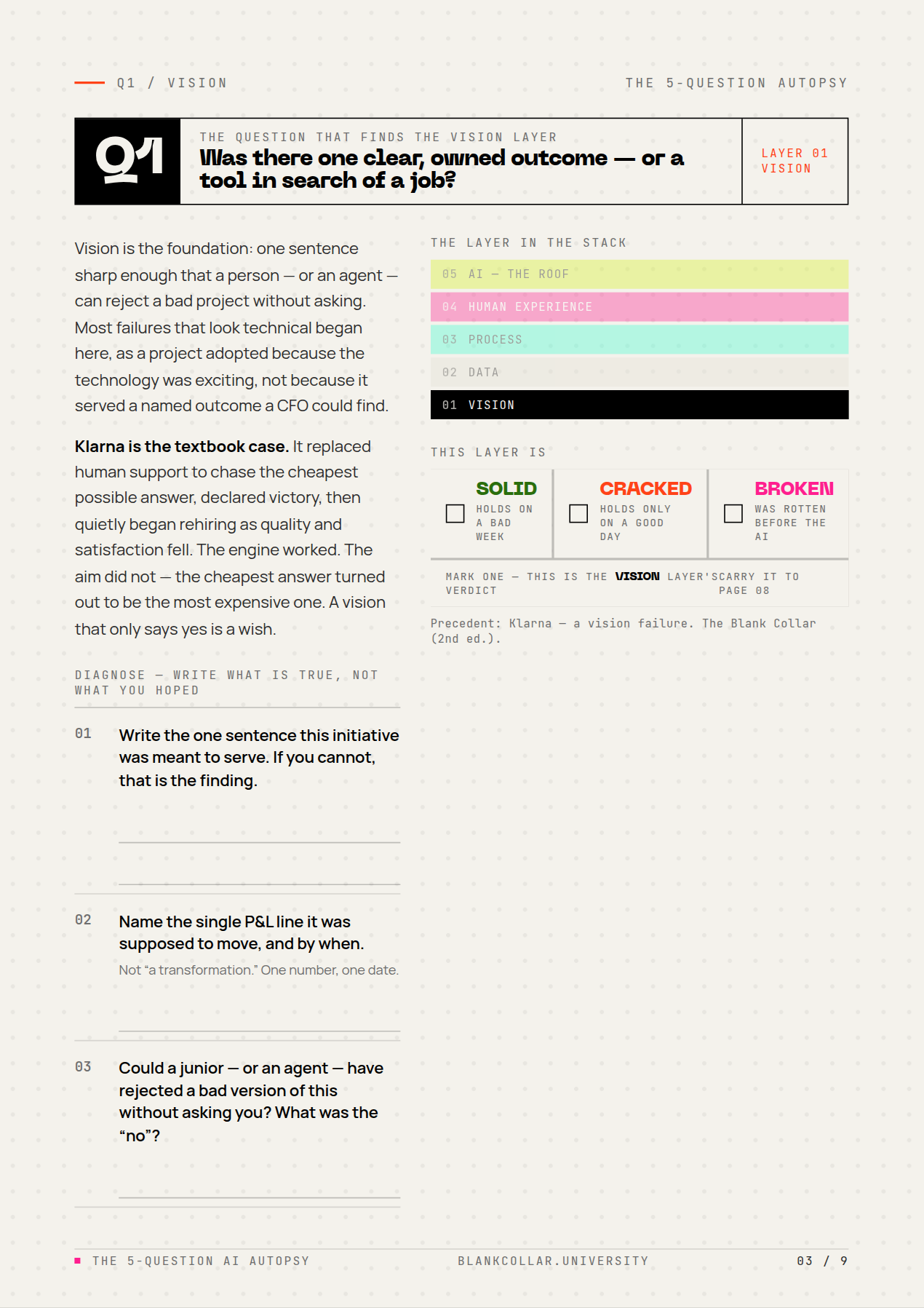
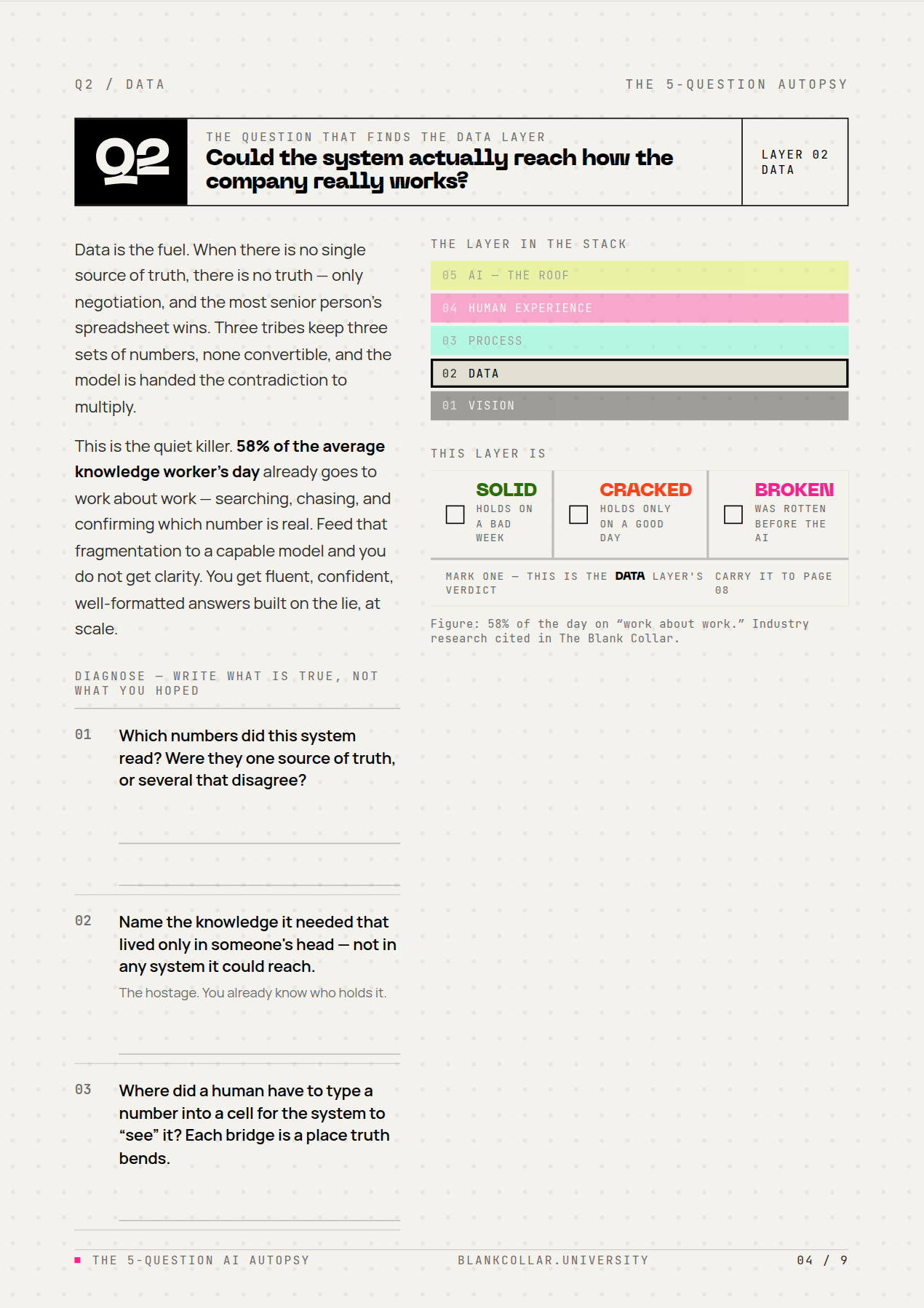
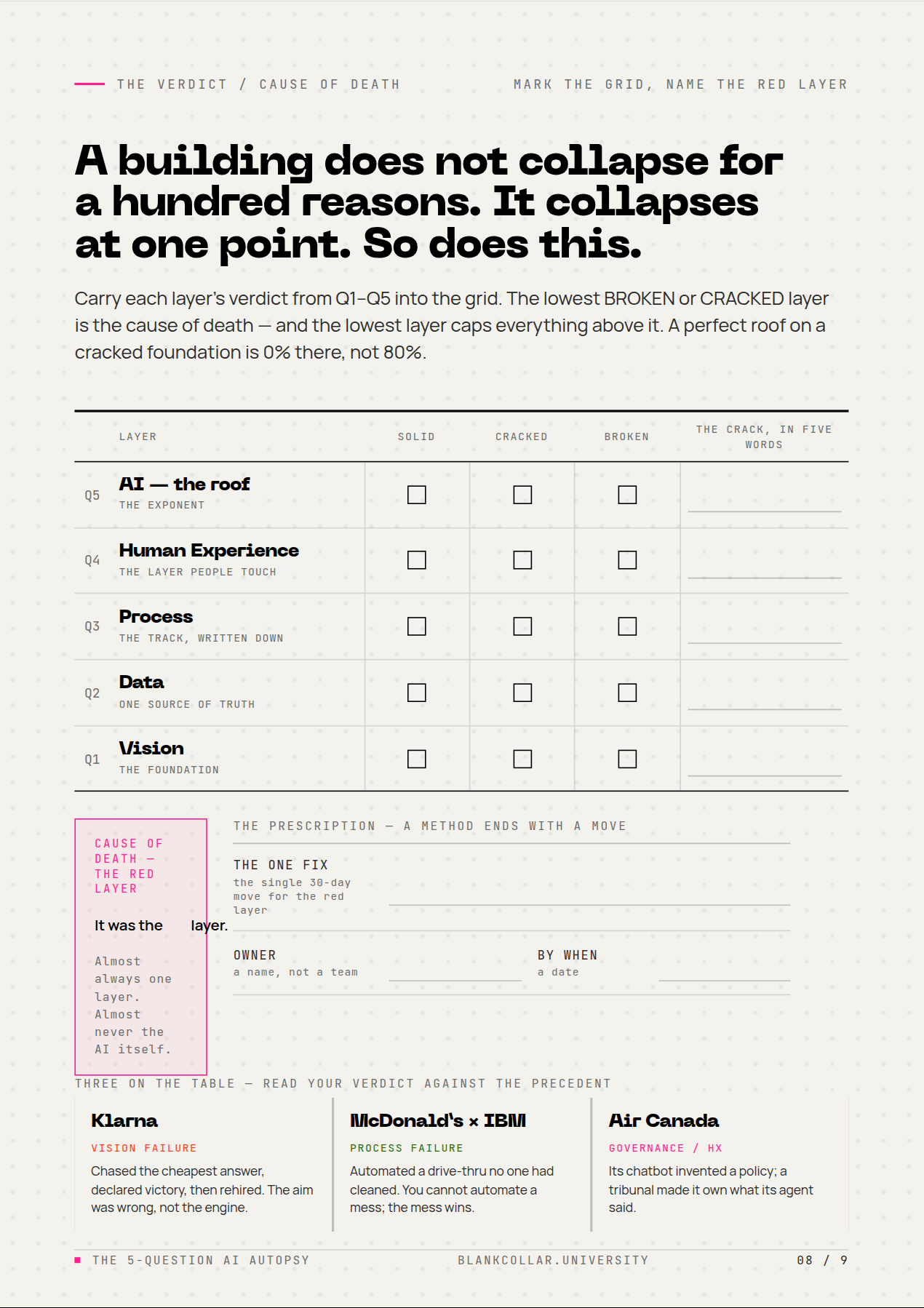
This is a printable, fillable post-mortem you run on one initiative at a time. Five questions, one per layer of the Stack (Vision, Data, Process, Human Experience, then AI), each with write-in prompts and a SOLID / CRACKED / BROKEN verdict. A grid at the end identifies the red layer, the cause of death, and the one fix that brings it back. The order is the diagnosis.
What’s inside
- 01Name the caseA short intake: the initiative, the owner, the one P&L line it was meant to move.
- 02Q1 Vision · Q2 DataWas there one owned outcome, and could the system reach how the company really works?
- 03Q3 Process · Q4 Human ExperienceDid it absorb the real workflow, and did people trust it, brief it, and own the verdict?
- 04Q5 the exponentDid you multiply something solid, or scale chaos faster? The question you answer last.
- 05The verdict gridMark each layer, find the red one (the cause of death), and write the one fix, owner, and date.
How to use it
- Print it, take one failed or failing initiative, and answer all five questions honestly in about fifteen minutes.
- Found the red layer? Run The Stack Self-Audit on the whole house, or The Index for a measured read.
Keep going.
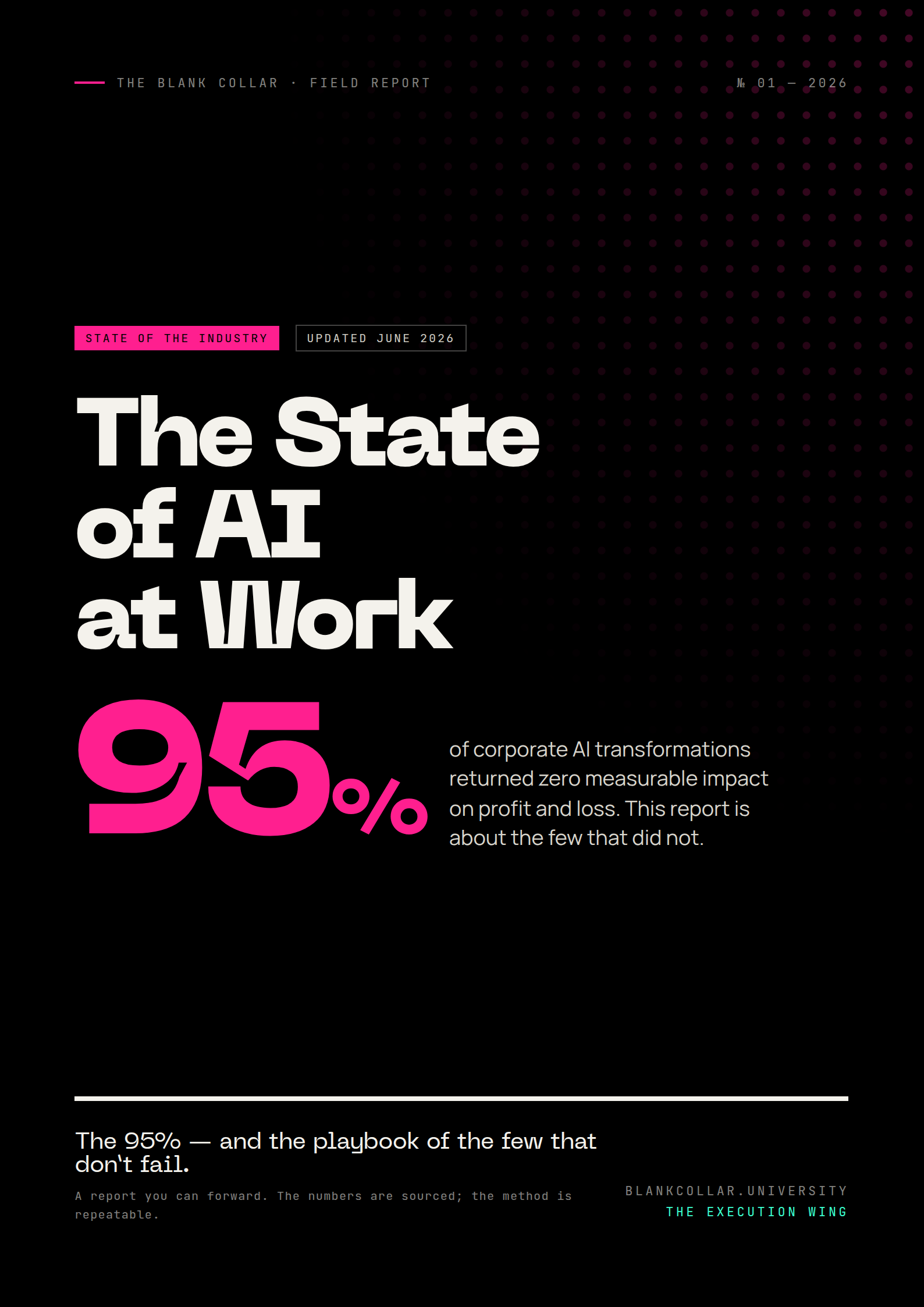
The State of AI at Work · 2026
The 95%: why most AI transformations fail, and the playbook of the few that don't. A data-led field report you can forward.
Read more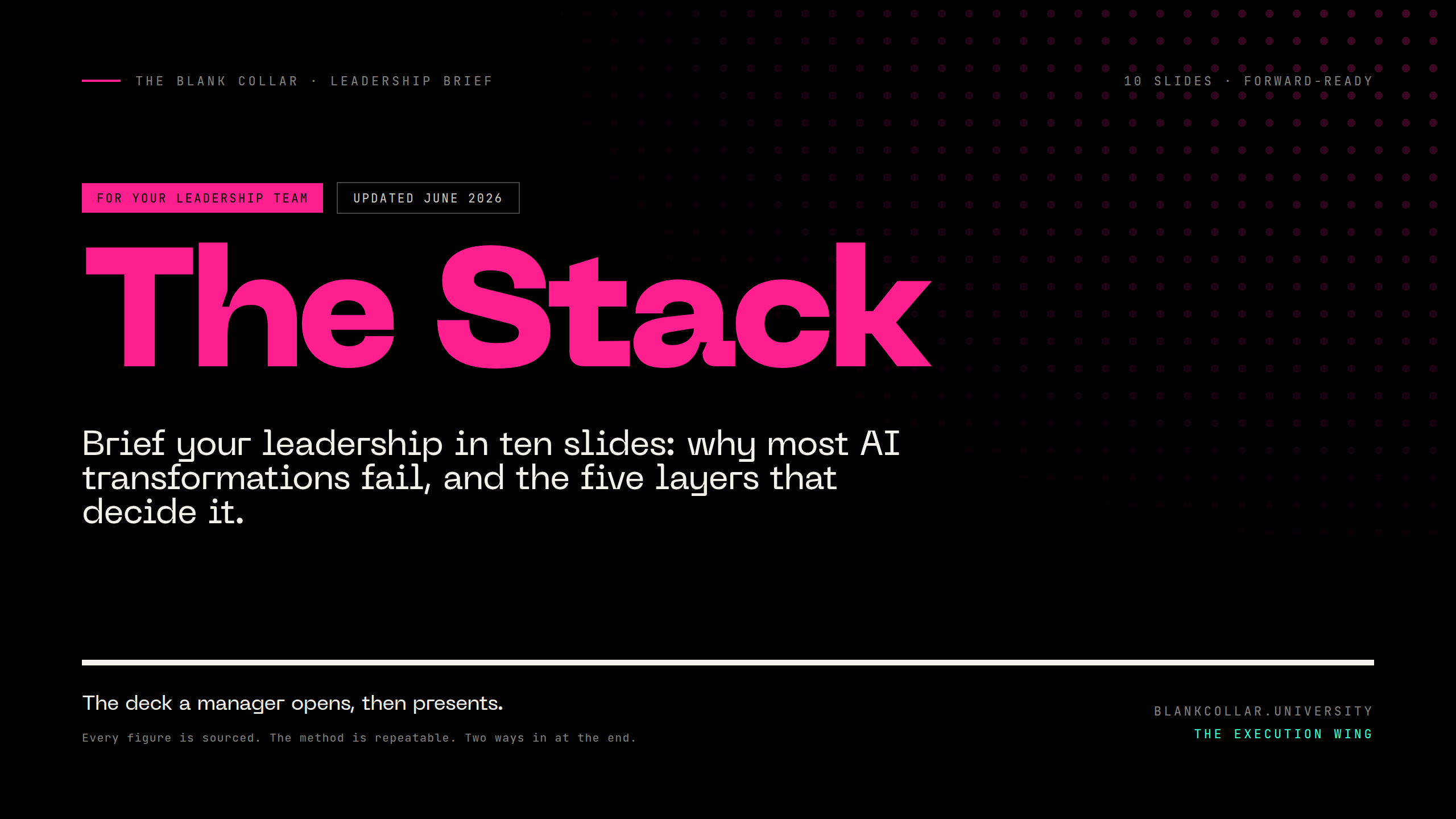
The Stack: Brief Your Leadership in 10 Slides
The deck a manager opens, then presents: why most AI transformations fail, and the five layers that decide it. Forward-ready, every figure sourced.
Read more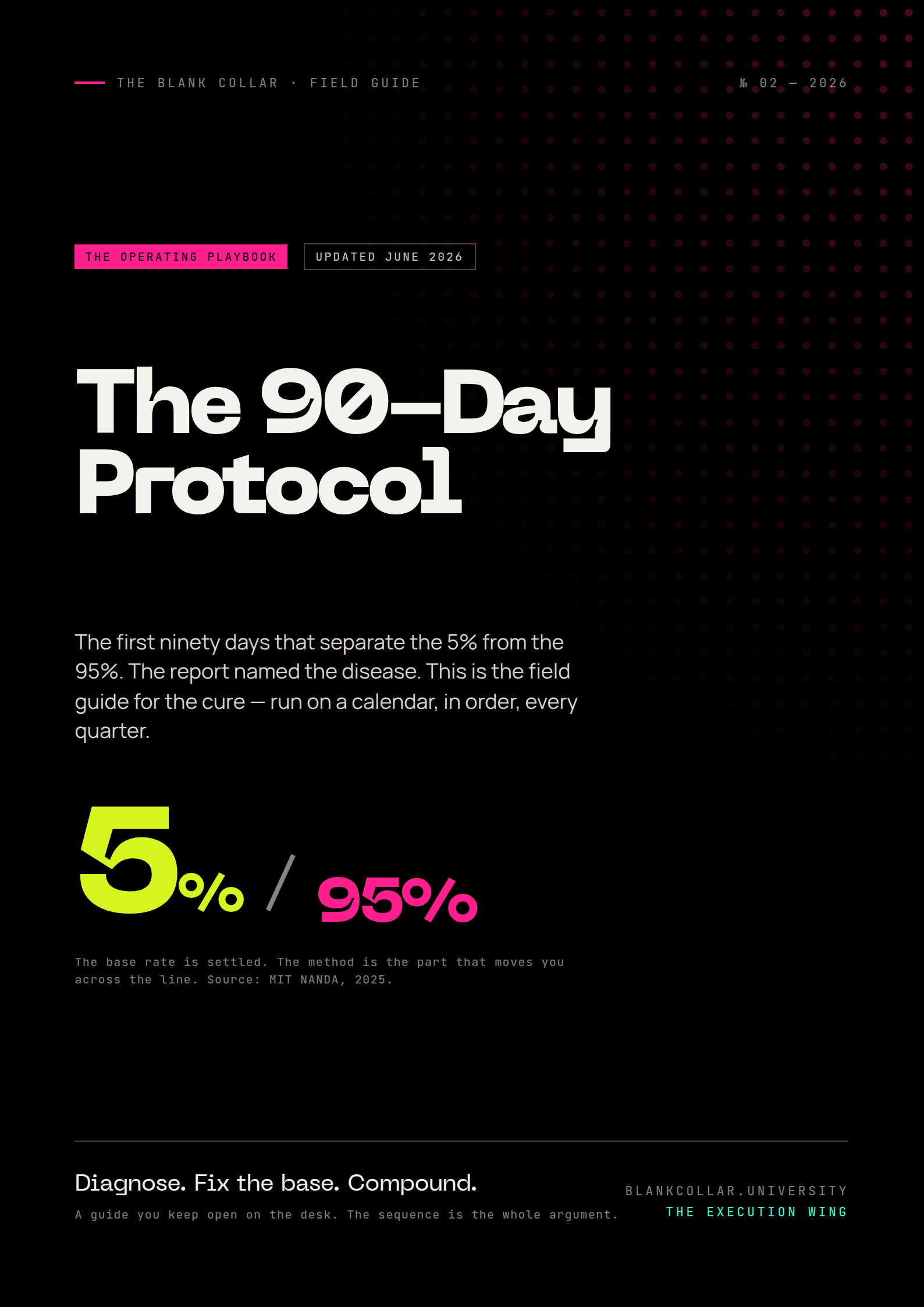
The 90-Day Protocol
The first ninety days that separate the 5% from the 95%. The operating playbook the report points to (diagnose, fix the base, compound) on a calendar.
Read moreFree at the door.
Tools are the first layer of the Codex. The curriculum is where you put them to work, on your own role and your own real work.